

Introducing Cavalier’s New Threat Feeds: Deep Dive into Phishing-as-a-Service (PhaaS) Intelligence
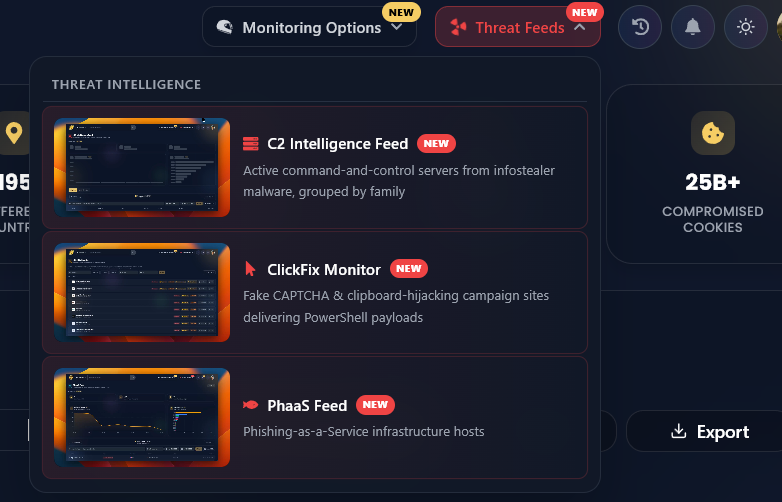
We are thrilled to introduce three new Threat Feed modules in Cavalier: C2 Data, ClickFix, and PhaaS (Phishing-as-a-service). Together, they give security teams comprehensive visibility into active attacker infrastructure – from infostealer command-and-control (C2) servers to malicious ClickFix pages executing clipboard injection, to turnkey Phishing-as-a-service (PhaaS) kits targeting corporate credentials.
What’s New: PhaaS Intelligence
As Phishing-as-a-Service (PhaaS) platforms become extremely prominent in high-profile corporate hacks, giving lower-tier actors turnkey access to advanced credential harvesting tools, preemptive visibility is more critical than ever. The new PhaaS Threat Feed is unique to Hudson Rock, providing an unparalleled view into active phishing host networks before they are deployed in targeted spear-phishing campaigns against your workforce.
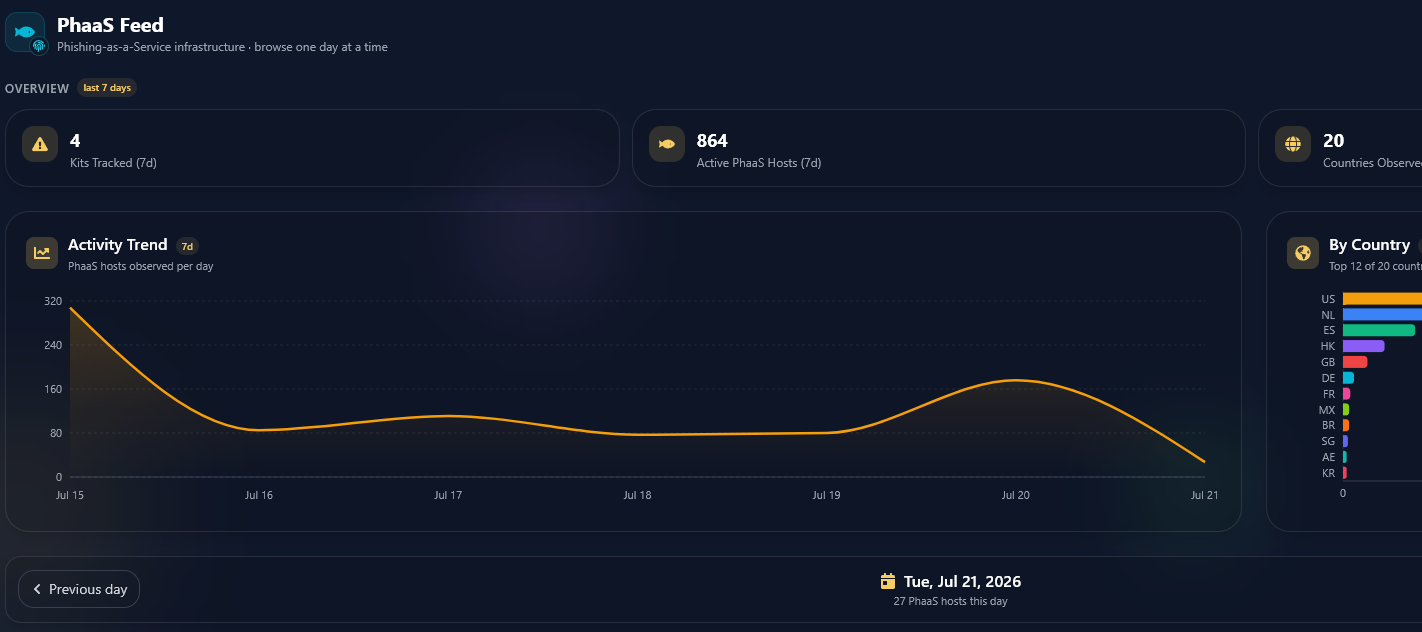
Inside Cavalier, security teams can seamlessly review:
- Active phishing host networks and root domains
- Specific kit tags and deployment platforms
- Resolved IP nodes and server infrastructure
- Infostealer credential telemetry linked to the hosting platform
Tracking the Most Dangerous Phishing Kits
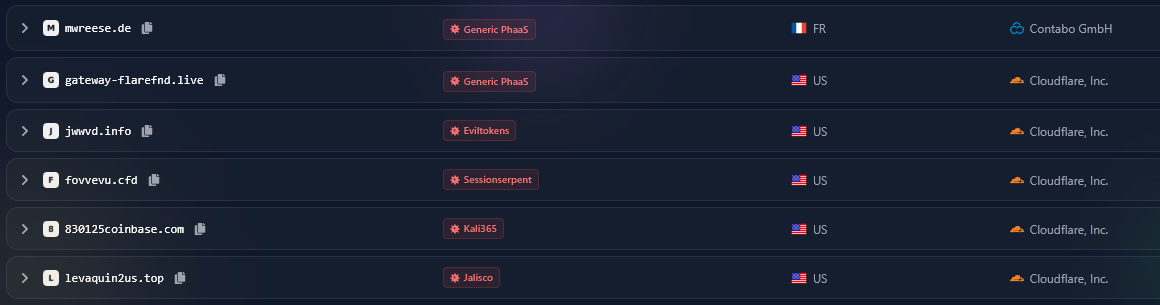
Cavalier groups PhaaS hosts by their specific operational kits, allowing defenders to understand the exact tactics they are facing. Our intelligence tracks massive networks running well-known platforms like Eviltokens and Kali365, as well as exclusive, recently uncovered campaigns like SessionSerpent—intelligence you will only find surfaced through Hudson Rock.
Uncovering Infrastructure and Initial Access
The PhaaS feed allows you to go beyond the domain level and map out the entire operational footprint of an attacker. For example, you can surface surface infrastructure like garage-door-repair(.)cyou running Eviltokens, or pinpoint specific IP nodes like 43.172.6.35 tied to Kali365 operations.
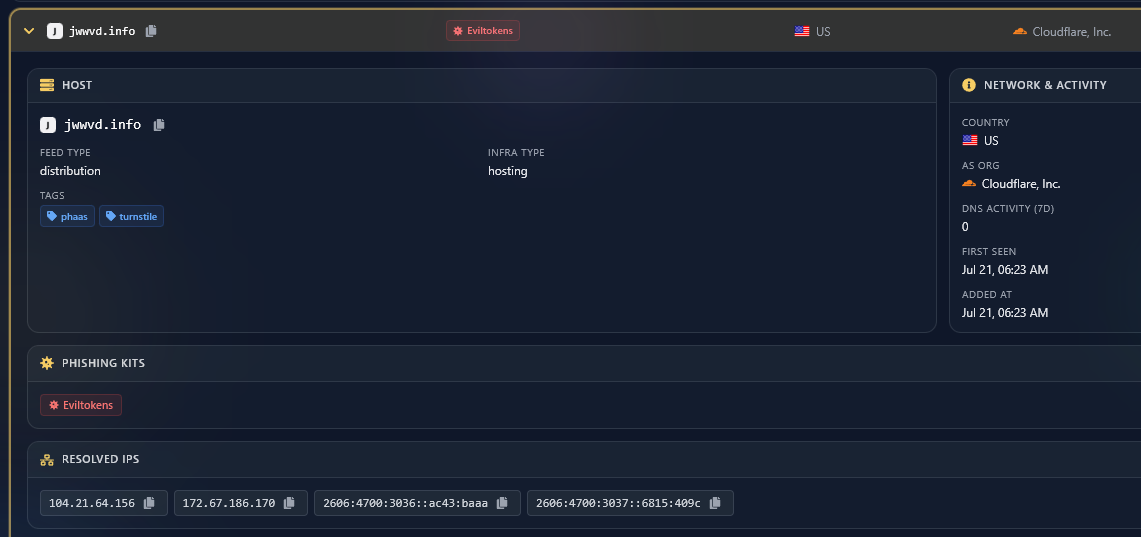
Crucially, just like our ClickFix and C2 modules, the PhaaS feed integrates directly with our infostealer telemetry. This allows you to instantly see if a host domain (e.g., webcindario(.)com) has compromised employee credentials tied to it, revealing exactly how attackers gained initial control of the server to host their phishing infrastructure.
Seamless API Integration for Proactive Defense
By feeding these surfaced domains, IP networks, and hosting infrastructure directly into your perimeter controls, firewalls, and DNS sinks, organizations can preemptively block turnkey phishing networks before employees receive a single malicious email.
All datasets are fully accessible via REST API endpoints for automated ingestion into your SIEM or SOAR. Teams can utilize the GET /json/v3/threat-feeds/phaas endpoint to retrieve active Phishing-as-a-Service indicators with flexible filtering, or use the GET /json/v3/threat-feeds/phaas/{host} endpoint for specific host network lookups and operational status checks.
Protect Your Organization from Imminent Intrusions
With our new Threat Feeds, cybersecurity teams can monitor live C2 infrastructure from infostealer campaigns, ClickFix networks, and PhaaS operations to proactively block malicious communications.
To learn more about how Hudson Rock protects companies from intrusions caused by info-stealer infections of employees, partners, and users, and how we enrich existing cybersecurity solutions with our cybercrime intelligence API, please schedule a call with us, here:
https://www.hudsonrock.com/schedule-demo
We also provide access to various free cybercrime intelligence tools that you can find here:
www.hudsonrock.com/free-tools
Thanks for reading, Rock Hudson Rock!
Follow us on LinkedIn: https://www.linkedin.com/company/hudson-rock
Follow us on Twitter: https://www.twitter.com/RockHudsonRock