

First Physical Robbery Potentially Linked to Revolut Data Breach
Following the recent Revolut hack we reported on, we are now seeing the terrifying real-world consequences of compromised customer data. We are tracking what appears to be the first physical robbery potentially linked directly to the data breach. The trend of physical robberies stemming from cyber incidents is becoming more and more common, and is deeply concerning.
The U.K. Home Invasion
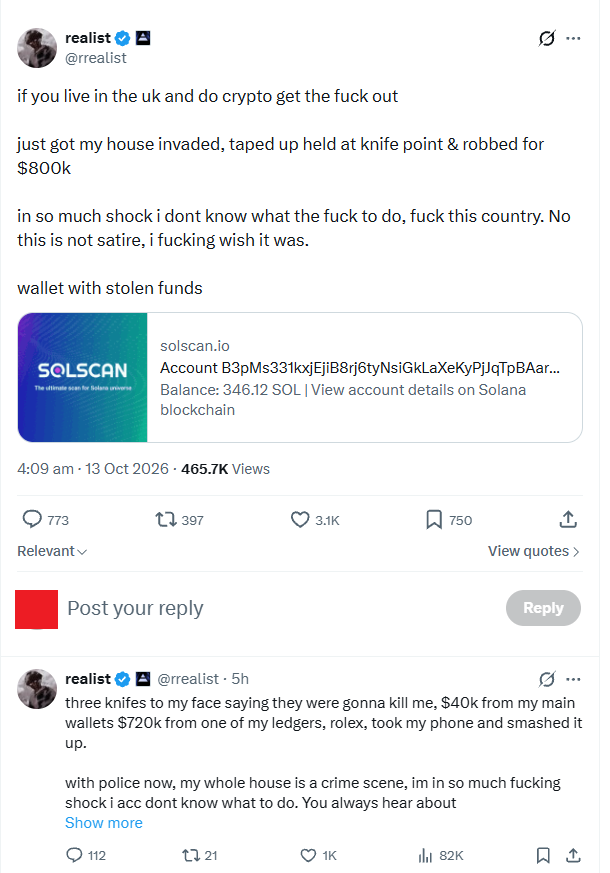
On October 13th, a cryptocurrency investor in the U.K. reported a horrific home invasion on X (formerly Twitter). The victim stated they were held at knifepoint, taped up, and violently robbed of approximately $800,000 in cryptocurrency, alongside physical valuables.
The Revolut Connection
What makes this incident particularly alarming in the context of our recent reporting is the victim’s banking affiliation. In a follow-up reply, when asked directly if they banked with Revolut, the victim confirmed that they did.

The victim confirming their status as a Revolut customer, establishing a potential link to the recent data exposure.
Given the breadth of the recent Revolut breach where hackers used compromised government emails to socially engineer the bank into handing over highly sensitive customer dossiers, threat actors now have access to exact physical addresses alongside financial profiles. This creates a highly targeted hit list for physical extortion and robbery.
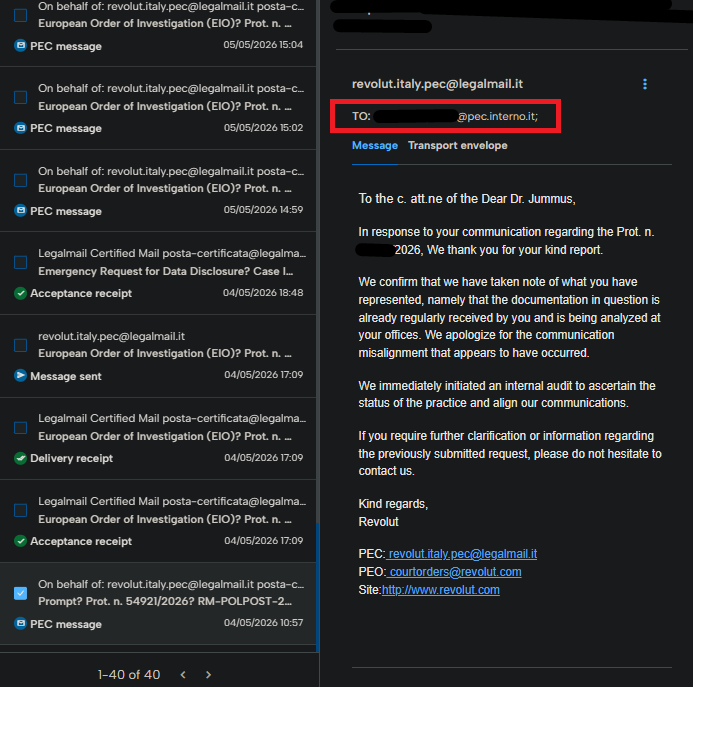
Correspondence demonstrating the hacker utilizing an Italian government email address to communicate with Revolut’s legal department.
How This Could Have Been Prevented
This escalating physical danger highlights the critical importance of proactive cybercrime intelligence. For the Revolut hack specifically, monitoring if official government emails that request customer data are not compromised in Infostealer logs would have likely prevented this entirely.
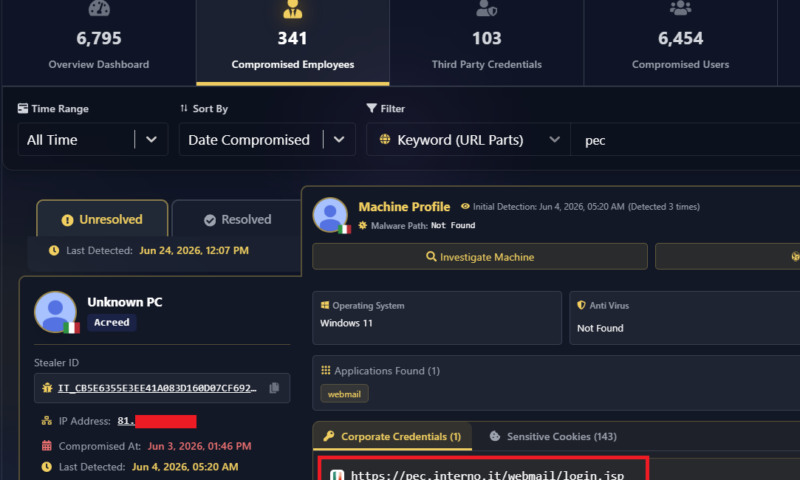
As we reported back in September, attackers utilized compromised ‘pec.interno.it’ (Italian Ministry of the Interior) credentials which were already visible in Hudson Rock’s cybercrime database to bypass Revolut’s verification processes.
Read our initial reporting on the breach mechanics here: https://www.hudsonrock.com/blog/revolut-hackers-used-infostealers-for-elaborate-social-engineering
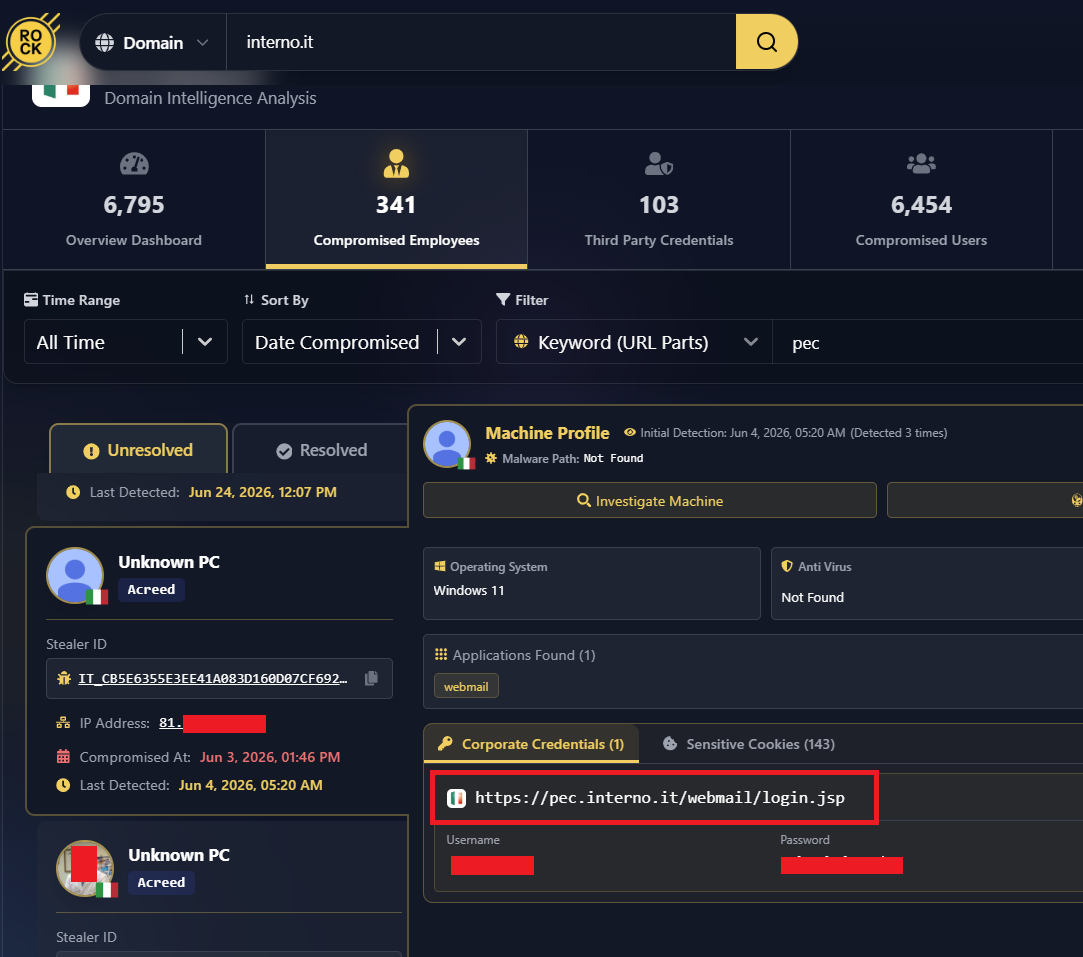
Hudson Rock’s Cybercrime Intelligence database revealing numerous compromised credentials for the ‘interno.it’ domain, providing an easy avenue for the attackers.
To learn more about how Hudson Rock protects companies from imminent intrusions caused by info-stealer infections of employees, partners, and users, as well as how we enrich existing cybersecurity solutions with our cybercrime intelligence API, please schedule a call with us, here:
https://www.hudsonrock.com/schedule-demo
We also provide access to various free cybercrime intelligence tools that you can find here:
Thanks for reading, Rock Hudson Rock!
Follow us on LinkedIn: https://www.linkedin.com/company/hudson-rock
Follow us on Twitter: https://www.twitter.com/RockHudsonRock